- Age Strong, Live Long!
- Posts
- From Bob Shaw: How to Boost Daily Energy
From Bob Shaw: How to Boost Daily Energy
Age Strong, Live Long! Newsletter

Bob Shaw
June 16, 2025


How To Boost Daily Energy (without caffeine!)
Let’s talk about energy—not the quick-fix kind, but the kind that sustains you over decades.
Today we’re diving into the system our body relies on every second to create usable energy. This is the engine behind how well we move, think, and feel—not just today, but as we age. If you’re serious about aging strategically, keeping this energy system strong and efficient should be high on your priority list.
What about caffeine? Full disclosure—I’m a gigantic fan of caffeine (plain black coffee). But here’s the nuance: caffeine doesn’t actually give you energy. It’s a stimulant, not a fuel. Caffeine can enhance alertness, improve focus, and mask fatigue—but it’s not a replacement for true cellular energy (However, it should be noted that per a new study, if consumed in the morning, coffee can increase longevity… those who do are 31% less likely to die of heart disease).
So, if we want real, lasting vitality, we need to look deeper—into the mitochondria (the tiny power plants in our cells that turn food and oxygen into usable energy) and the daily behaviors that either support or sabotage our energy reserves.
Let’s get into it.
Mitochondria: Our Tiny Energy Factories
Mitochondria take the macronutrients we get from food (fat, carbs, and protein) and turn them into something called ATP—which is the energy our bodies actually use. Think of ATP as our body’s fuel currency. No ATP, no energy.
Mitochondria are packed into almost every type of cell, but especially in places that burn a lot of energy—like our muscles, liver, heart, and brain. When our mitochondria are firing on all cylinders, we feel sharper, stronger, and more alive.
“Mitochondrial health is the cornerstone of longevity—it’s how we keep the lights on in every cell.”
Why Mitochondria Health Is Important After Age 45
Feeling drained or worn out more often than not? You’re not alone. According to the CDC, between 9% and 15% of adults over 45 say they feel exhausted most days or every day. And that doesn’t even account for the many more who experience low-level fatigue several times a week—just enough to dull their energy, focus, and drive.
“As you get older, your mitochondrial function naturally declines, leading to common symptoms that many attribute to aging: persistent fatigue, brain fog, trouble losing fat, and difficulty recovering from workouts.”
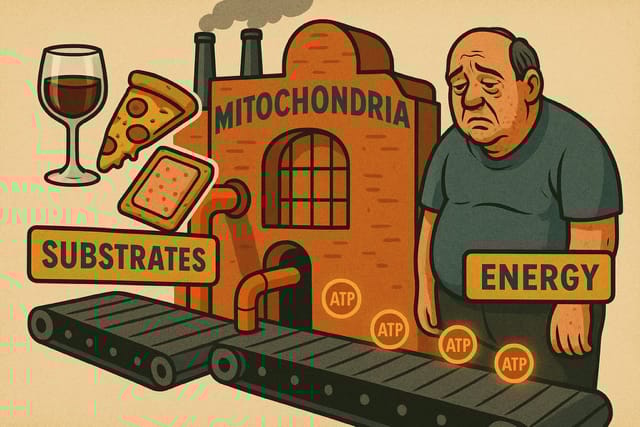
Poor Mitochondrial Health
But here’s the encouraging part: this energy slump isn’t inevitable. Fatigue after 45 isn’t just “part of getting older”—it’s often a signal that our cells, and especially mitochondria, need support.
With the right habits, we can restore mitochondrial function—and even boost it. That means more consistent energy, sharper thinking, better stress resilience, and a slower pace of biological aging.

Optimized Mitochondrial Health
Now, let’s talk about some smart ways we can start optimizing our mitochondrial health.
Top 5 Ways to Optimize Mitochondrial Health
To boost energy at the cellular level, we want to increase both the quantity (how many mitochondria we have) and the quality (how well they function). Fortunately, our bodies are adaptable— certain lifestyle habits signal cells to build more and better mitochondria over time.
Move More (Especially Zone 2 Cardio + Strength Training)
Aerobic exercise like walking, biking, or swimming at a steady pace tells your body to build more mitochondria. Strength training also boosts mitochondrial efficiency in muscle tissue. (In case you missed it… Muscle: Your Suit of Armor for AgingPrioritize Quality Sleep
Deep, restorative sleep is when the body repairs and regenerates—including mitochondrial maintenance. Poor sleep disrupts energy production and speeds up aging. (Check out “Why We Sleep” by Dr. Matthew Walker, PhD)Eat Whole, Nutrient-Dense Foods
Real food (especially colorful plants, healthy fats, and protein) provides the raw materials mitochondria need to thrive. Antioxidants protect them from damage.Practice Cold and Heat Exposure (Safely)
Occasional exposure to cold (like cold showers) or heat (like saunas) triggers mild stress that stimulates mitochondrial growth and resilience.Manage Stress with Breath, Nature, and Connection
Chronic stress damages mitochondria. Mindful practices like deep breathing, spending time outside, and meaningful relationships help your body stay in a regenerative state. (Check out Dr. Andrew Huberman demonstrating a quick and effective breathing technique to immediately reduce stress: Reduce Stress with Physiological Sighs - Andrew Huberman #shorts)
More Tips to Boost Daily Energy:
Stay Well Hydrated
The first sign of dehydration is fatigue, not thirst. Aim to sip water consistently throughout the day, especially if you're active or in warmer environments.Be Mindful with Caffeine and Alcohol
Caffeine can give a quick energy lift, but too much—especially later in the day—can interfere with quality sleep. Alcohol may make you feel drowsy, but it disrupts deep sleep and contributes to next-day fatigue. Both are also diuretics, which can dehydrate you and further sap energy.Avoid Smoking and Vaping
Nicotine and tobacco reduce oxygen delivery and damage mitochondria, impairing your body’s ability to make energy. Over time, this adds up to greater fatigue and accelerated aging.Consider Targeted Supplements (with Professional Guidance)
Nutrients like CoQ10, magnesium, B vitamins, and alpha-lipoic acid support energy metabolism and mitochondrial health. But don't self-prescribe—talk to a registered dietitian nutritionist (RDN) or lifestyle medicine practitioner who can assess your bloodwork and identify what your body truly needs.
Summing it up… How to Boost Daily Energy
Daily fatigue doesn’t have to be your normal— especially after 45. By focusing on mitochondrial health, you’re not just chasing more energy for today, but investing in a stronger, clearer, and more resilient tomorrow. Small, consistent changes in how you move, eat, sleep, and manage stress can have a powerful ripple effect over time.
Spread the Message: Age Strong, Live Long!
If you feel this information may be helpful to friends in their strategic aging journey, please forward this E-mail. Friends can subscribe via the following link:
Physical Structure, Inc. - Personal Fitness Coaching
If you would like to learn more about Physical Structure coaching services by scheduling a free 15-minutes consultation, please E-mail me at [email protected] or visit our website at the following link:

Bob Shaw - Fitness Coach - Founder, Physical Structure, Inc.
Thanks again for being part of the Age Strong, Live Long! community!
Until next time…