- Age Strong, Live Long!
- Posts
- Balance. Agility. Reflexes.
Balance. Agility. Reflexes.
Age Strong, Live Long! Newsletter - Issue #6

Bob Shaw
November 11, 2025


💪🧠Protect Your Future Health — One Step, One Move, One Reaction at a Time
As we age, we often think (rightly) about keeping our heart strong, our muscles toned, and our joints flexible — but there’s another system that quietly determines how long we stay active, confident, and independent: our balance, agility, and reflexes.
These three are how our brain and body talk to each other. Balance is our body’s ability to stay centered and stable. Agility is how quickly we can adjust and move in any direction. Reflexes are our body’s split-second reactions that help us catch ourselves when we slip, stumble, or misstep.
When balance, agility, and reflexes decline, everyday movements become riskier — leading to falls, injuries, and loss of confidence that can limit independence. But when we keep these sharp through regular training, we move with stability, confidence, and vitality — protecting our freedom and extending our active years.
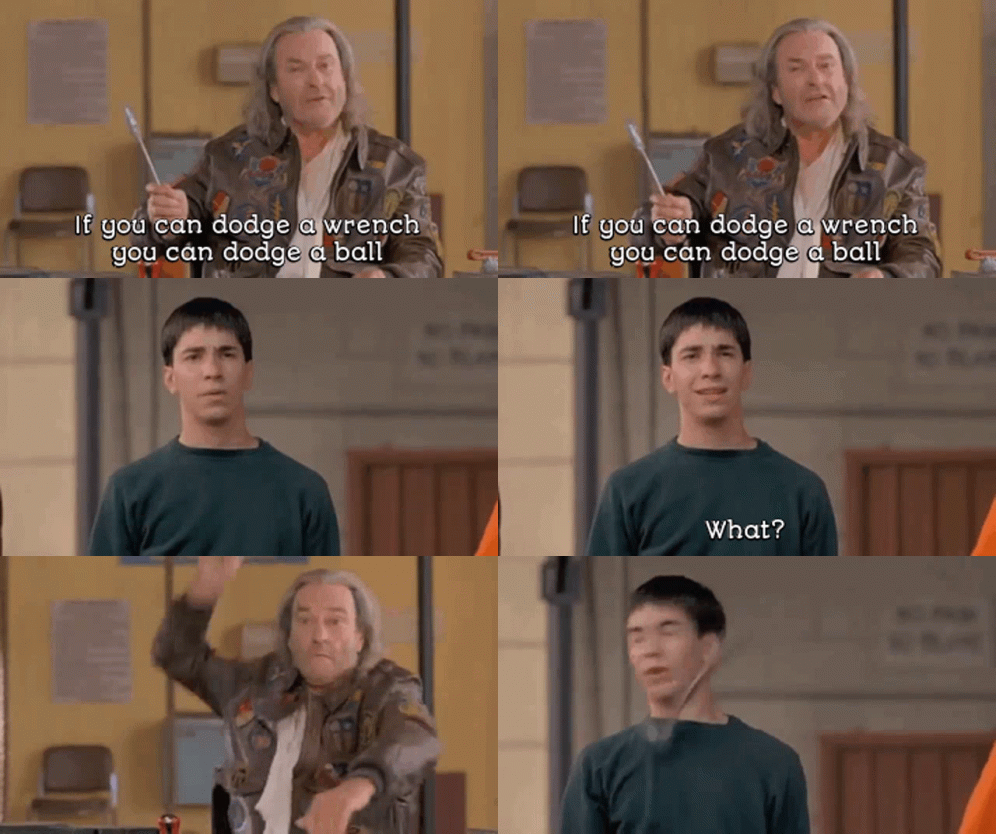
“Some people have a misconception that part of getting old is, you’re going to fall. That’s not true. You can control how you fall, or if you fall.”
🔑Why They Decline — and Why It Matters
Starting about in our 40s, the communication between our brain, nerves, and muscles begins to slow. The fast-twitch muscle fibers — the ones responsible for quick movements and reactions — shrink and weaken if they’re not trained. Combine that with slower nerve signaling and reduced sensory input (like vision and inner-ear balance), and our risk of falls, joint injuries, and mobility loss rises sharply.
Poor balance and slower reflexes don’t just cause falls — they can subtly limit our confidence in movement. We might move less, avoid stairs, or stop certain activities. That loss of movement then speeds up the decline in muscle, coordination, and independence — a cycle we want to break early and permanently.
✅The Good News
We can retrain our body’s balance, agility, and reflexes at any age. The brain and nervous system are adaptable — what scientists call neuroplasticity. When we practice challenging our balance and reaction time, our brain builds new pathways that make us more stable, coordinated, and quick.
This kind of training doesn’t just protect you — it re-energizes your athletic ability and confidence. You’ll move better, feel lighter, and react faster.
🧩How to Test Your Balance (Safe & Simple)
Try this at home near a wall or counter for support.
Stand on one leg with your eyes open.
Time how long you can hold the position without wobbling or putting your foot down.
Goal: 20 seconds or more (eyes open).
For a greater challenge, try with eyes closed — aim for 10 seconds.
If you need support, lightly touch the wall or a chair.
✅ What it tells you:
If you can’t balance for 10 seconds on one leg, it may signal reduced nerve-muscle coordination and a higher risk of falls — but it’s absolutely trainable.
🏋️♀️ How to Rebuild Balance, Agility & Reflexes
Before diving into specific balance or agility drills, it’s crucial to build the physical foundation that supports them. Regular resistance training (for muscle and strength), cardiorespiratory training (both Zone 2 endurance work and high-intensity VO₂-max sessions), and postural training (what we call Horizontal and Vertical Core training) form the base layer of movement competence. Together, they improve joint stability, muscle control, and body alignment — allowing your nervous system to coordinate efficiently when you introduce balance and reaction training. In other words, strength, posture, and conditioning prepare the “hardware” so your “software” — the brain and nerves — can perform at its best.
1. Train Fast-Twitch Fibers:
Include short bursts of movement — quick step-ups on a bottom stair, gentle hops, or “shadow boxing”. These re-awaken the muscles that respond fast.
2. Challenge Balance:
Start by standing near a stable surface like a kitchen counter or sturdy chair. Lightly hold on while you shift your weight from one foot to the other or rise onto your toes. As your confidence improves, practice short heel-to-toe walks or gentle side steps while keeping support within reach. If you’re already well-conditioned, your approach can be more aggressive.
3. Add Agility Drills:
Use small cones, a jump rope, or side-to-side steps to teach your body to move and react quickly.
4. Integrate the Mind:
Balance and reflex training are as much about the brain as the body. Eye-tracking, coordination games, and even sports like pickleball or table tennis stimulate the nervous system and improve reaction time (but remember, training before you start these activities is key to prevent injury).
5. Gamify Balance and Agility:
When I’m walking down a busy street or in the subways system, I like to imagine I’m the original T-800 Terminator, Cyberdyne Systems Model 101 (The Terminator, 1984). Instead of hunting for Sarah Connor, I’m scanning the landscape for potential dangers that may require quick reaction and reflexes (potholes, broken curbs, runners, cyclists, scooters, buses, etc.). This requires me to keep my hands out of my pockets, not wear headphones or be looking at my mobile phone- paying close attention… constantly probing and monitoring my surroundings. Try it- It’s fun!

⚡The Takeaway
Balance, agility, and reflexes aren’t just about staying on your feet — they’re the foundation of confidence, independence, and longevity. When we train our brain and muscles to react, adjust, and stabilize, we don’t just prevent decline — we reclaim youthfulness in how we move, think, and live.
Physical Structure, Inc. - Personal Fitness Coaching
If you would like to learn more about Physical Structure coaching services by scheduling a free 15-minutes consultation, please E-mail me at [email protected] or visit our website at the following link:

Bob Shaw - Fitness Coach - Founder, Physical Structure, Inc.
Thanks again for being part of the Age Strong, Live Long! community!
Until next time… I’ll be back!